
Sacredness Doesn’t Need Props
At some point in adulthood, you realise that half the things labelled “tradition” were never actually chosen—they were just repeated often enough that no one questioned them. Suddenly there’s a set menu for how you’re meant to behave in December, and most of us didn’t get a vote. Someone decided which foods mean celebration, which days mean obligation, which gatherings are compulsory, and which emotions are acceptable. The month arrives wrapped in certainty, as if the script was signed centuries ago and we’re all just actors doing community theatre with forced enthusiasm.
But the older you get, the more suspicious you become of anything presented as non-negotiable.
Not in a cynical way—just in the way that happens when you’ve lived enough life to know that meaning doesn’t survive on autopilot. What mattered once doesn’t always matter now. What was sacred once may feel hollow. What was exhausting then may finally feel optional. And nothing bursts the myth of tradition quite like asking the simple, dangerous question: Do I actually want this?
Most people don’t ask because it feels ungrateful. As if modifying a ritual is the same as rejecting the people who practiced it before you. But keeping something that no longer fits doesn’t honour the past—it just postpones the present. Sacredness isn’t sustained through obligation; it’s sustained through attention. And attention requires choice.
There’s a moment in the old story where the holy doesn’t show up in the place everyone expected—it arrives somewhere ordinary, inconvenient, and completely unprepared. No architecture, no ceremony, no curated ambience. Just real life as it was. And somehow that becomes the setting. Not because the space was special, but because meaning can turn anything into a sanctuary when someone is willing to notice.
Maybe that’s the part we forgot: sacredness isn’t a structure. It’s not inherited like furniture. It’s not protected by repetition. Sacredness is whatever you choose to treat with care.
Some rituals will stay because they still feel alive. Lighting a candle at the end of the day. Eating something that tastes like memory. Sitting outside in the late light without checking your phone. You don’t need to justify these things—they justify themselves. They make the world feel a little more honest.
But other rituals can go. The ones that feel performative. The ones you dread. The ones that require a version of you that no longer exists. You’re not betraying anyone by letting them end. Rituals are meant to evolve—otherwise they become theatre.
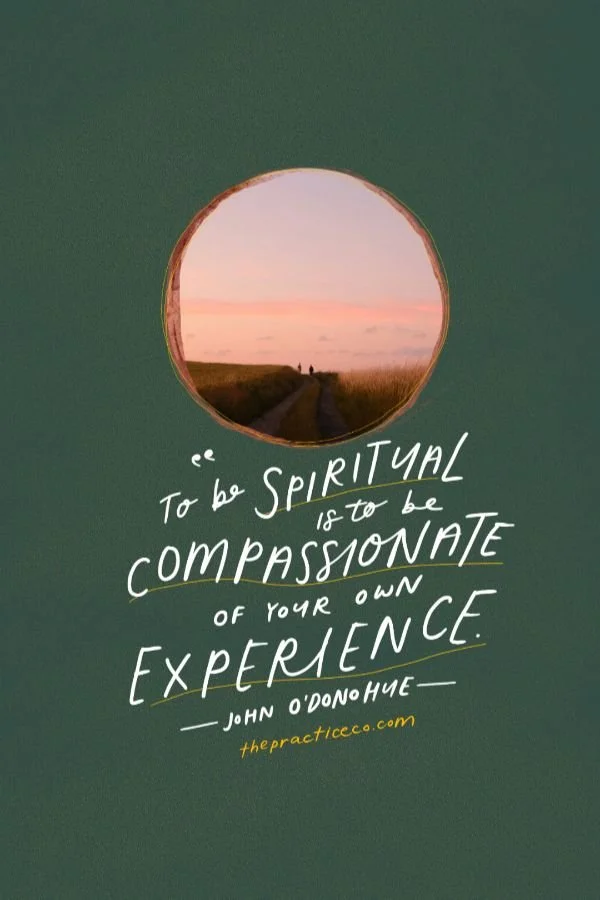
John O’Donohue wrote,
“To be spiritual is to be compassionate of our own experience,”
and December is often the month where compassion gets replaced with choreography. Everyone wants things to feel a certain way, and suddenly the smallest moment becomes a referendum on whether we’re doing Christmas correctly. As if there’s a judge in the sky handing out points for emotional consistency.
But life doesn’t become sacred because we perform it well. It becomes sacred because we inhabit it. Because we pay attention while it’s happening instead of analysing it later. Because we allow things to be real instead of rehearsed.
You’re allowed to make new rituals that reflect who you are now—not who you were ten years ago, or who someone else needs you to be. Maybe it’s the ritual of not rushing. Maybe it’s making space for silence even when the house is full. Maybe it’s opening the windows because the air feels better when it moves. Maybe it’s deciding that rest counts as participation. Maybe it’s laughter. Maybe it’s leaving early. Maybe it’s showing up in jeans instead of emotional armour.
Sacredness doesn’t need props. It needs presence.
And presence isn’t dramatic. It doesn’t require candles or curated playlists or spiritual language. Presence is the smallest thing: being where you are while you’re there. Not performing. Not managing. Not editing yourself for the comfort of the room. Just belonging to yourself.
Sometimes the most meaningful moment in December is not the one everyone remembers—it’s the one no one else notices. The breath you didn’t rush. The conversation that didn’t drain you. The decision you made without guilt. The feeling of sitting at your own table and recognising your own life.
There’s a quiet kind of power in choosing what you treat as sacred. It means you’re no longer waiting for meaning—you’re participating in it. It means you’re not outsourcing your experience to tradition. It means you understand that nothing becomes holy just because it’s old, and nothing becomes less holy just because it’s new.
You don’t need permission to create what matters. You just need honesty about what no longer does.
Maybe this is the year the rituals get smaller but truer. Maybe this is the year nothing is done for show. Maybe this is the year sacredness returns—not as performance, but as something you can feel.
The month doesn’t need to match the past in order to be meaningful. It just needs to match you.
LISTEN UP
Pay attention to the moment today that feels the most real, the one that asks nothing from you and still feels like enough.
Liz ox